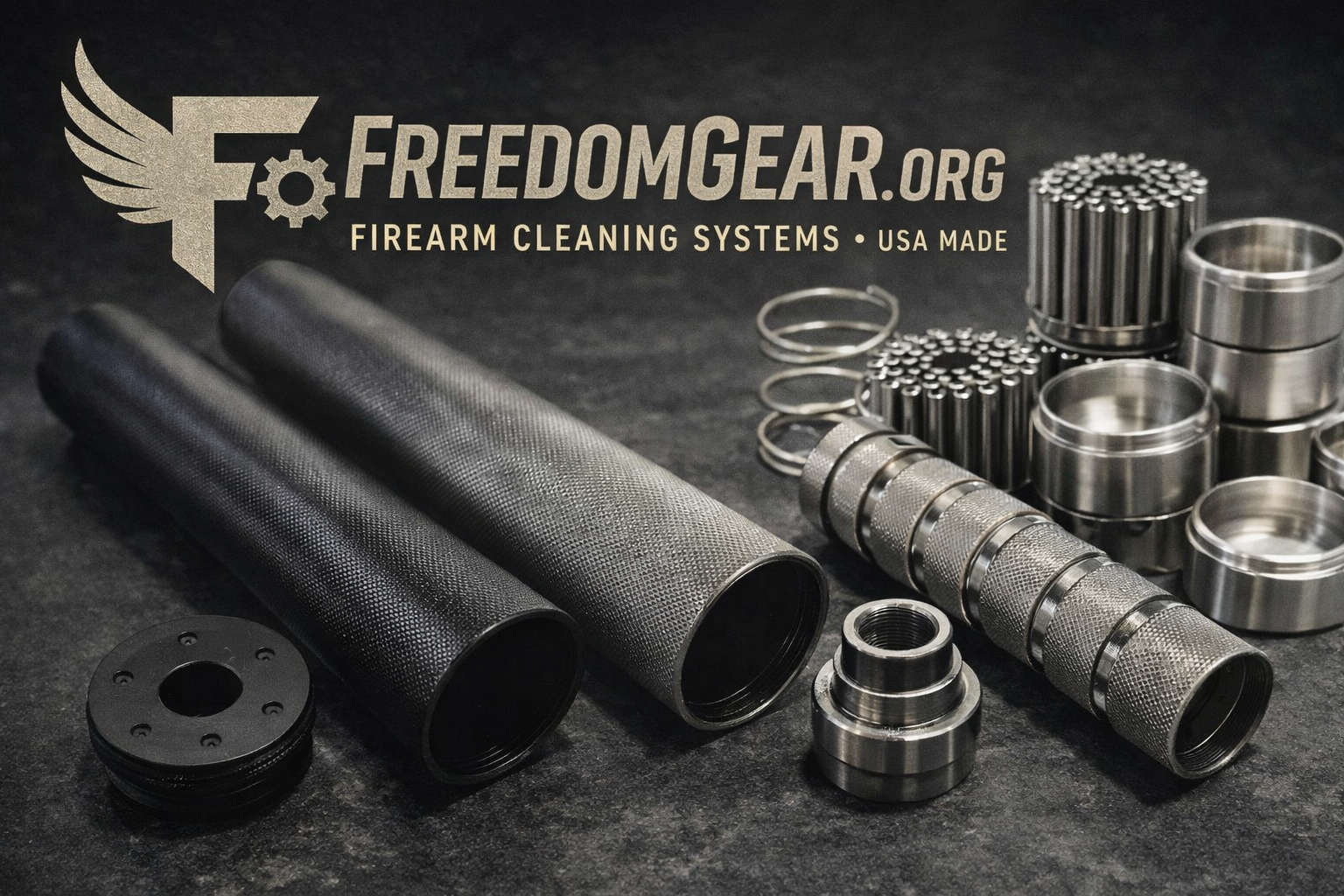
Solvent traps have solidified their role as indispensable tools for firearm owners in 2025, providing an eco-friendly and efficient method to capture cleaning fluids, lubricants, and debris during routine upkeep. This solvent trap buying handbook guide will help you navigate the essentials and nuances of selecting the right product. These devices, commonly known as solvent traps, help prevent environmental contamination while simplifying the cleaning process for pistols, rifles, and shotguns. Unlike noise-reducing accessories, solvent traps are strictly solvent trap cleaning accessories designed for maintenance, not modification. This in-depth guide explores advanced maintenance strategies, historical context, and best practices, with a spotlight on Freedom Gear’s premium lineup. For top-quality solvent traps that prioritize durability and compliance, visit Freedom Gear to browse their extensive collection tailored for modern firearm enthusiasts.
To fully appreciate their utility, let’s address what is a solvent trap in detail. A solvent trap is a threaded cylindrical device that attaches to a firearm’s muzzle, featuring internal dividers or cups that trap solvents, oils, and residue expelled during cleaning. Historically, these tools evolved from basic fuel filters in the early 2000s, gaining popularity for their practicality in workshops and ranges. As a solvent trap cleaning accessory, it minimizes mess, reduces exposure to harmful chemicals, and allows for solvent recycling, which can save users up to 50% on cleaning supplies annually according to industry estimates. Freedom Gear’s models incorporate high-grade materials for enhanced performance, making them ideal for both novice and experienced users seeking long-term reliability.
A frequent point of confusion is solvent trap vs suppressor
Where the key difference lies in purpose and regulation. Solvent traps are solely for capturing cleaning byproducts and should never be altered for sound suppression, as suppressors are classified under the National Firearms Act (NFA) and require ATF approval. Suppressors focus on baffling gases to quiet gunfire, whereas solvent traps use simple cups for fluid containment without any acoustic modification. This distinction is crucial to avoid legal pitfalls, as improper use can lead to felony charges. Freedom Gear emphasizes this in their product descriptions, ensuring their solvent traps remain compliant tools for maintenance only.
One of the most searched queries is are solvent traps legal, and in 2025, the answer remains affirmative when used as intended for cleaning and storage. Federal regulations, governed by the ATF, allow solvent traps without registration if they lack features indicative of silencers, such as bored holes or baffles designed for noise reduction. However, any objective design that could function as a silencer may trigger reclassification. For the latest official stance, refer to the ATF’s open letter on solvent trap devices at ATF Open Letter. Freedom Gear’s solvent traps are engineered to meet these standards, providing users with confidence in their legality for everyday maintenance tasks.
Delving into ATF solvent traps regulations, the Bureau of Alcohol, Tobacco, Firearms and Explosives has maintained strict guidelines since their 2023 open letter, with no major overhauls in 2025 despite speculation around broader firearm reforms. Regulations prohibit marketing or modifying solvent traps as silencers, and devices with pre-drilled centers or assembly jigs may be deemed illegal without NFA compliance. Recent discussions in 2025 forums highlight potential impacts from new bills, but current rules stress intended use only. Visit the ATF’s official site at ATF.gov for comprehensive resources. Internally, refer to our section on legal tips below for practical advice on staying compliant during maintenance.
For those prioritizing lightweight yet robust options, a titanium solvent trap from Freedom Gear offers exceptional corrosion resistance and heat tolerance, making it suitable for aggressive solvents like copper removers or bore cleaners. Titanium models weigh up to 40% less than steel counterparts, reducing fatigue during extended cleaning sessions, and their non-reactive surface prevents buildup over time. Freedom Gear’s titanium solvent trap line includes customizable lengths for various calibers, available at Preppers Discount Titanium.
Budget-friendly yet effective, an aluminum solvent trap kit from Freedom Gear provides a complete setup with tubes, end caps, and thread protectors, ideal for entry-level users or frequent travelers. Aluminum’s natural oxide layer resists rust, and these kits are compatible with common threads like 1/2×28 for 9mm or .22LR firearms. In humid climates, clean your firearm weekly using the kit to prevent moisture-induced corrosion, as advised in maintenance guides. Shop Freedom Gear’s aluminum solvent trap kit at Solvent Traps America Aluminum Kits.
When durability is paramount
A stainless steel solvent trap from Freedom Gear excels in withstanding harsh chemicals and repeated use, often lasting over a decade with proper care. Stainless steel’s chromium content forms a passive film that blocks oxidation, making it perfect for professional armories or high-volume shooters. Maintenance best practice: After cleaning, dry thoroughly and apply a light oil coat to prevent pitting. Freedom Gear’s stainless steel solvent trap inventory is accessible at Preppers Discount Stainless Steel.
Understanding solvent trap parts is essential for effective maintenance; components include the main tube for containment, freeze plugs or cups for trapping debris, and thread protectors to safeguard barrel threads. Inspect parts quarterly for wear, replacing any corroded cups to maintain efficiency. Freedom Gear offers modular solvent trap parts for easy upgrades, allowing customization based on firearm type. Browse their selection at Solvent Traps America Parts.
For convenience, buy solvent traps online through Freedom Gear’s secure platform, which guarantees ATF-compliant products with discreet shipping and detailed user manuals. In 2025, online purchases have surged due to enhanced e-commerce security, making it easier to acquire kits without leaving home. Their solvent trap kits include assembly instructions and compatibility charts. Start shopping at Freedom Gear for reliable, USA-made options that support veteran-owned businesses.
Navigating solvent trap suppressor conversion requires caution, as modifying a trap for noise reduction is illegal without an approved ATF Form 1, potentially resulting in severe penalties under the NFA. Freedom Gear strictly advises against such alterations, focusing instead on maintenance applications. For those considering legal builds, file Form 1 first; details are available at ATF Form 1.
The term solvent trap fuel filter originates from its visual similarity to automotive filters, but in firearm contexts, it’s a misnomer that can lead to legal misunderstandings. True solvent traps are purpose-built for cleaning, with no filtration for fuels. Freedom Gear’s products feature clear labeling to emphasize their cleaning role, helping users avoid ATF scrutiny.
For advanced users, form 1 solvent trap builds permit creating custom suppressors from trap components, but only after ATF approval via Form 1, which involves fingerprints, photos, and a $200 tax stamp. This process takes 30-90 days in 2025. Freedom Gear’s kits can serve as bases, but consult experts. A helpful civilian guide is at RocketFFL Guide.
Enhancing versatility, solvent trap adapters from Freedom Gear allow seamless attachment to various barrel threads, such as 5/8×24 for .30 caliber rifles, expanding compatibility across your collection. Adapters should be torqued to 20-30 ft-lbs for secure fit. Meanwhile, solvent trap storage solutions leverage the sealed tube for dry storage of items like patches, batteries, or matches during travel, with humidity packs recommended for long-term use. Find adapters at Preppers Discount Adapters.
Finally, solvent trap reviews in 2025 consistently highlight Freedom Gear’s superior craftsmanship, with users praising ease of assembly and effectiveness in real-world scenarios like seasonal hunting prep. Their solvent trap assembly guide details steps: attach the adapter to the muzzle, secure the tube, insert cups, and pour solvent slowly to avoid overflow. For visual aids, check YouTube tutorials at YouTube Solvent Trap Assembly. With proper maintenance, your Freedom Gear solvent trap will deliver years of reliable service.
